
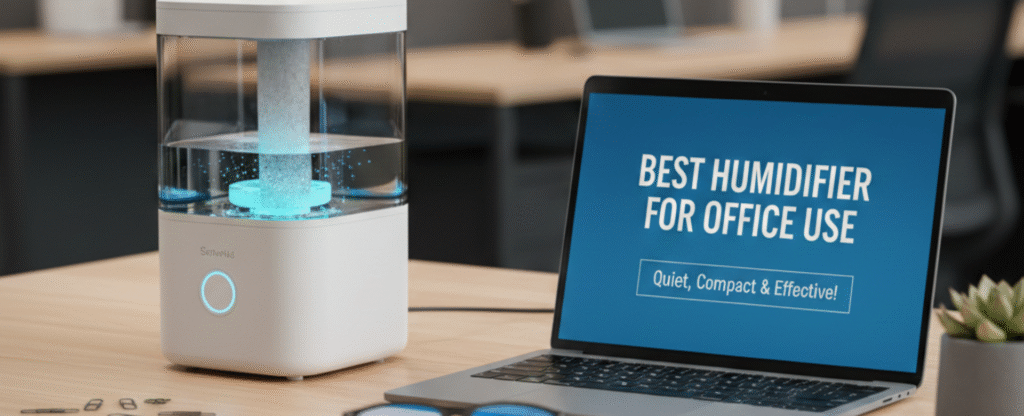
Dry office air doesn’t just make your throat scratchy and your skin flaky — it saps focus, irritates eyes, and can increase the spread of airborne viruses and dust. Picking the right humidifier for your office (whether it’s a private cabin, shared workspace, or open-plan floor) is about matching the unit’s size, noise level, maintenance needs and safety features to your daily routine. This guide walks you through what matters and recommends a few real-world picks you can trust.
Also Visit our instagram account
Table of Contents
ToggleWhy a humidifier can help your office productivity
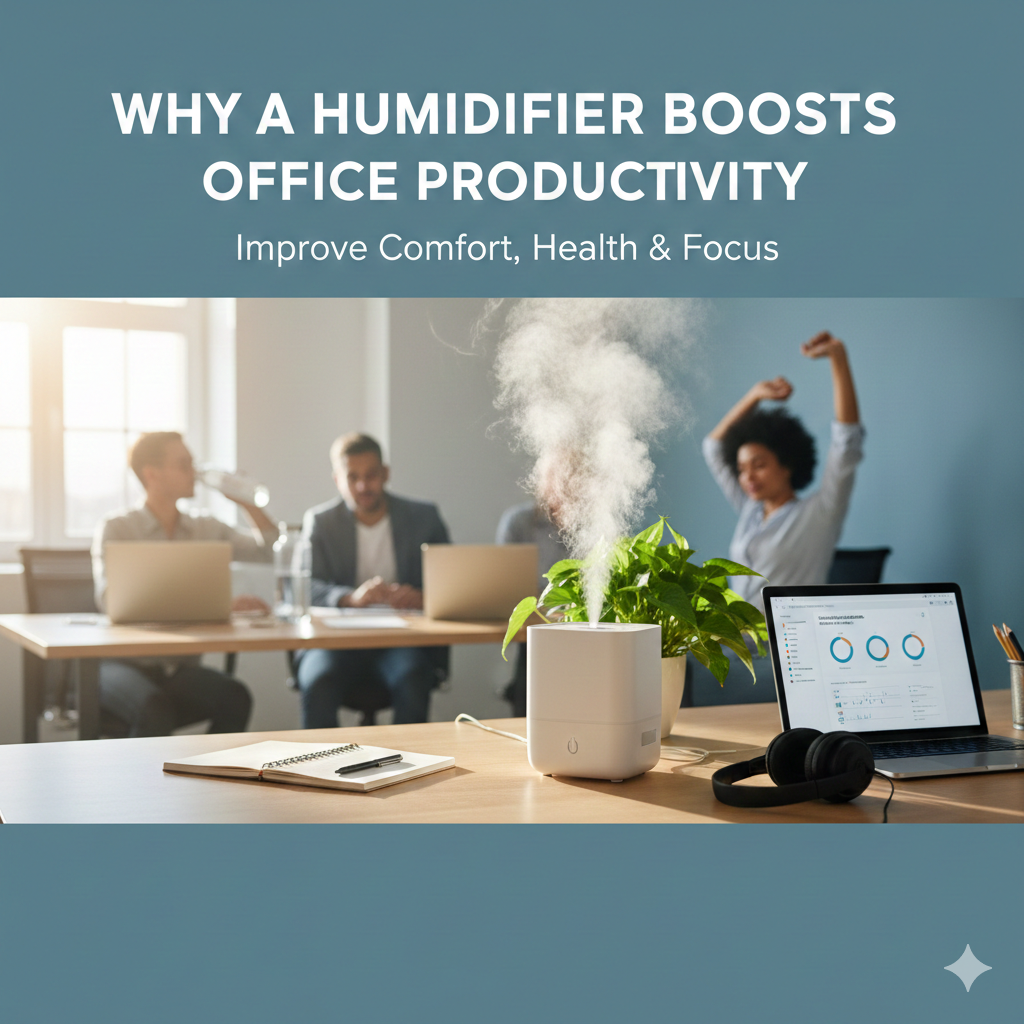
Ideal indoor relative humidity for comfort and health is generally between 40–60%. In many offices — especially during heating months or in air-conditioned spaces — humidity falls well below that. Low humidity can cause dry eyes, sore throats, static electricity that annoys equipment, and even increase the survival time of some viruses on surfaces. A compact, well-managed humidifier helps reduce those problems and can make long work sessions more comfortable.
What to consider before buying
Quick checklist — keep these in mind when shopping:
Room size / coverage: Desktop personal humidifiers suit small desks and single cubicles (100–250 sq ft). Larger offices need console or whole-room units. Choose based on square footage, not “number of people.”
Noise level: Offices require whisper-quiet operation. Look for units advertised at ≤30–40 dB or described as “ultra-quiet” in test reviews. Several lab tests and roundups note quiet operation as a top factor for office picks.
Type — ultrasonic vs evaporative vs warm mist: Ultrasonic (cool-mist) models are energy efficient and quiet; evaporative units are simple and hygienic but can be noisier; warm-mist units disinfect water by heating but use more power. For shared workspaces, many reviewers recommend cool-mist ultrasonic models for quiet, steady output.
Ease of maintenance: Office units should be easy to refill and clean; look for top-fill designs, removable tanks, and accessible components. Filters (if used) add ongoing costs.
Safety & smart features: Auto-shutoff, built-in humidistat (to avoid over-humidifying), and app or voice control are useful — especially if you’ll run the unit unattended. Some models offer antimicrobial tech or dual air-purifier combos for extra benefits.
People also ask
An office humidifier helps maintain proper moisture levels in the air. It reduces dry skin, dry eyes, throat irritation, and breathing discomfort caused by air conditioning. It also improves overall comfort and productivity at work.
For offices, cool mist humidifiers or ultrasonic humidifiers are the best options. They are quiet, energy-efficient, and safe to use around electronic devices like laptops and desktops.
For offices, cool mist humidifiers or ultrasonic humidifiers are the best options. They are quiet, energy-efficient, and safe to use around electronic devices like laptops and desktops.

Leave a Reply